
Engineers Elevating Standards for Green Homes Across Florida
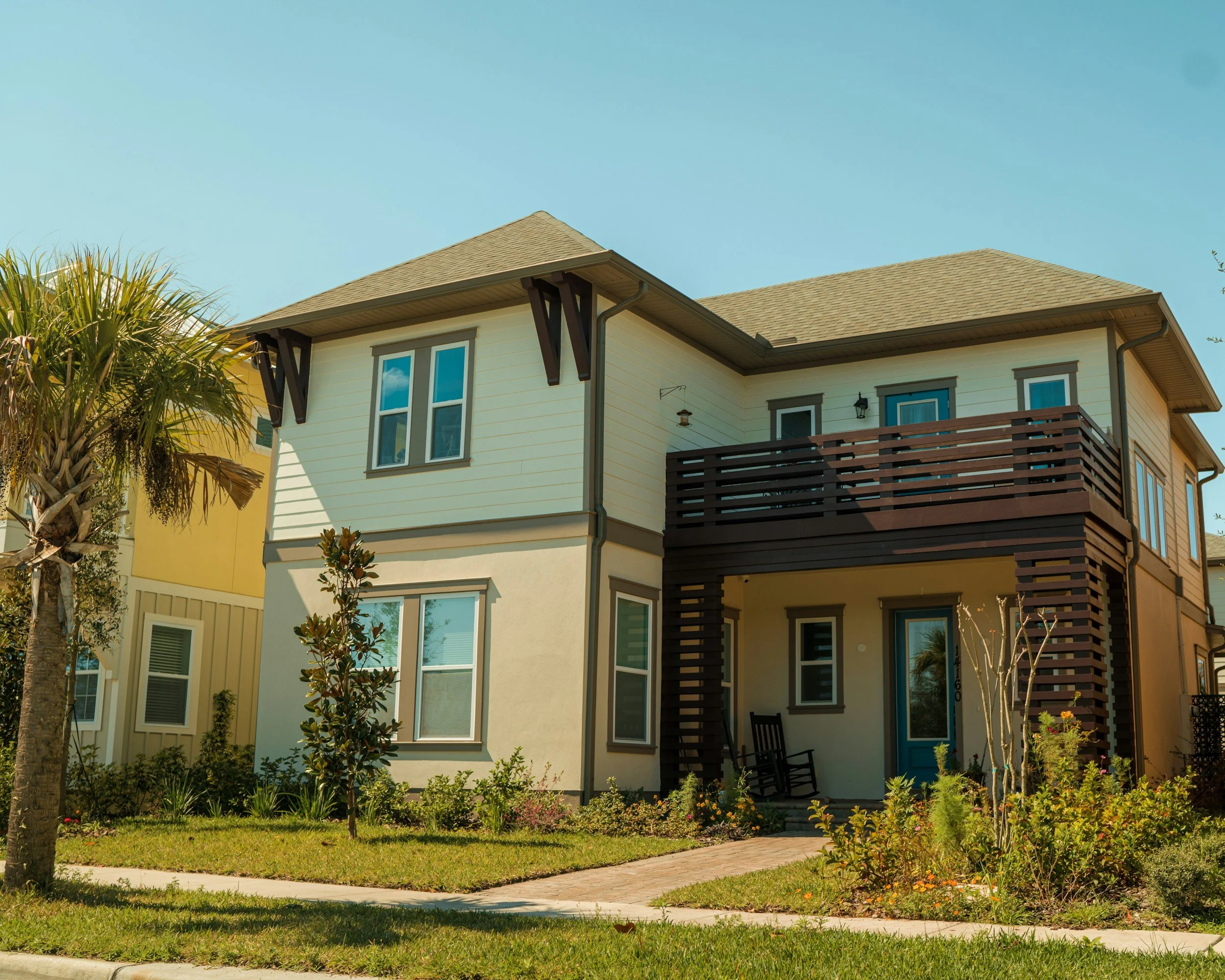
Photo by Eric Ardito/UPSPLASH.
For more than a quarter century, the Florida Green Building Coalition (FGBC) has been the state’s leader in creating and improving building standards.
The organization takes a scientific approach to these standards, using state-specific criteria to address Florida's factors – like its hot-humid environment, distinctive topography, unique geology, and vulnerability to natural disasters. The building standards are designed to decrease the burden on the environment while increasing the value of a home.
The Coalition recently released its 13th version of the Florida Green Home Standard, their criteria for designating single-family homes, multi-family homes and buildings with four or fewer stories as “Green.” Points towards certification are earned by incorporating green features in eight categories of construction, and a construction project can earn a bronze, silver, gold or platinum certification based on the total number of points accumulated.
Building on Longstanding Success
For decades, Florida residential markets have been trending green. Master-planned communities including Babcock Ranch near Ft. Myers, Lakewood Ranch near Sarasota and Greenwood Ranch near Ocala each stand as large-scale residential projects with green initiatives.
Neighborhoods like Madera near Gainesville and Harmony near St. Cloud represent earlier iterations of green living. These two master-planned and Green-certified communities were built to connect residents with nature, preserving natural areas and wildlife while promoting conservation and energy-efficiency.
“A homeowner may not have any idea what a green building is, but when you start to explain the energy savings, water efficiency, the improved air quality… green building rating systems tend to alleviate a lot of those concerns,” said Daniel Denis, president of the Coalition and RunBrook LLC, a building performance and sustainable design consulting firm based in West Palm Beach.
In last year’s National Green Building Standard statistics, Florida ranked No. 1 in single-family home green certification activity, indicative of green efforts across the state, which also ranks second in the multi-family home category.
“There are certain municipalities that mandate FGBC or some other green building certification, and in those areas, we obviously see significant growth in the certification numbers,” said Denis. “Even a minimum level of certification of bronze signals to the marketplace that you built a better building than your neighbors. There's value there.”
How Engineers Shape FGBC
Engineers across the state play an important role in developing the Coalition’s resources and advancing its initiatives, and they were deeply involved in the most recent iteration of the Green Home Standard.
“Some of the ideas that we have are very lofty and ambitious,” Denis said. “Oftentimes the engineers who are doing the design are giving the feedback from the construction side of what things cost (and also) the feasibility and constructability of certain types of methods and systems.
“They tend to give us that real world reality check because we don't want to push the market so much that it negatively impacts homeowners and the affordability for these projects.”
The Green Home Standard focuses on eight primary categories: energy, water, lot choice, site, health, materials, disaster mitigation and a general category for new builds and renovations. New homes must also complete a prerequisite category that deals with items including swimming pools or spas, considerations for waterfront properties and invasive exotic landscaping.
Engineers play a large role in the mechanical, electrical, and plumbing portions of these projects, all of which make up significant parts of the certification process.
“Without (engineers), we wouldn't be able to capture as many points as we do,” said Denis. “Whether it's energy modeling or efficient design, such as specifying particular products and flush and flow fixtures and things like that, those are crucial.”
Setting a Higher Standard
Updates in the Water category allocate points for using no or drought-tolerant turf, plants and trees. In the Health category, points are now awarded for controlled mechanical ventilation, using Manual D duct design specified by the Air Conditioning Contractors of America (ACCA), and incorporating a usable entry area.
Additions to the Energy section call for builders to install a state-certified, rated solar hot water system and insulated hot water piping among others. The Lot Choice category allots points for homes built on infill sites or within a half mile of existing basic community resources.
“The FGBC standards are always changing and evolving,” said FGBC Executive Director CJ Davila. “Each of the standards undergoes a renovation every three years.”
Additionally, The FGBC integrates the Home Energy Rating System (HERS) and other national certifications into its Green Home Standard.
The latest Disaster Mitigation category allots points for achieving a FORTIFIED certification, a criteria developed by the Insurance Institute for Business & Home Safety (IBHS). FORTIFIED criteria are built on decades of research aimed at limiting storm damage.
“Resiliency and hardening were the big priorities for 2025, following the 2024 hurricane season which caused billions of dollars in damage across the west coast of Florida,” Davila said. “Builders and owners concentrated on improving the housing stock through initiatives which reduce wind damage, limit flooding and improve utility services.”
The standard isn’t just useful for new builds, but also for existing residences.
“We often say the most sustainable building is the one that's already built,” Denis said. “Oftentimes we get caught up in the obvious, when the dollars and cents are right in front of us. ‘Oh, we're saving money on our energy bill or we're saving money on our water bill’ – sure, that's a great benefit to building green, but extending the useful life of your asset increases its value.”
Florida Markets Increasingly Going Green
Florida was ranked second in RESNET’s Top 10 States for HERS Rankings in 2024. RESNET, a recognized national standards-making body for the building energy efficiency rating and certification systems in the U.S., creates and maintains HERS rankings, which measures a home’s energy efficiency and performance.
As Florida’s population continues to grow, individuals and families will be settling into new single- and multi-family properties across the state. The number of green homes across the state is growing alongside its population, offering stronger and more conservation opportunities for housing.
“Homes that are certified Florida Green use less energy, less water, are healthier and are more durable,” Davila said.
FGBC’s membership of builders, developers, and engineers is dedicated to building a stronger, sustainable future for the state, and as they continue to improve their resources, the organization hopes to grow in number to help their cause and Florida’s growing populations.
“These members are responsible for identifying how to best improve the standards to ensure they are moving the state forward,” Davila added. “We encourage individuals to become members and help with this endeavor.”
“That's kind of where we are today – just trying to be good stewards of the rating system and try to push construction in the state towards a more sustainable future,” said Denis.