
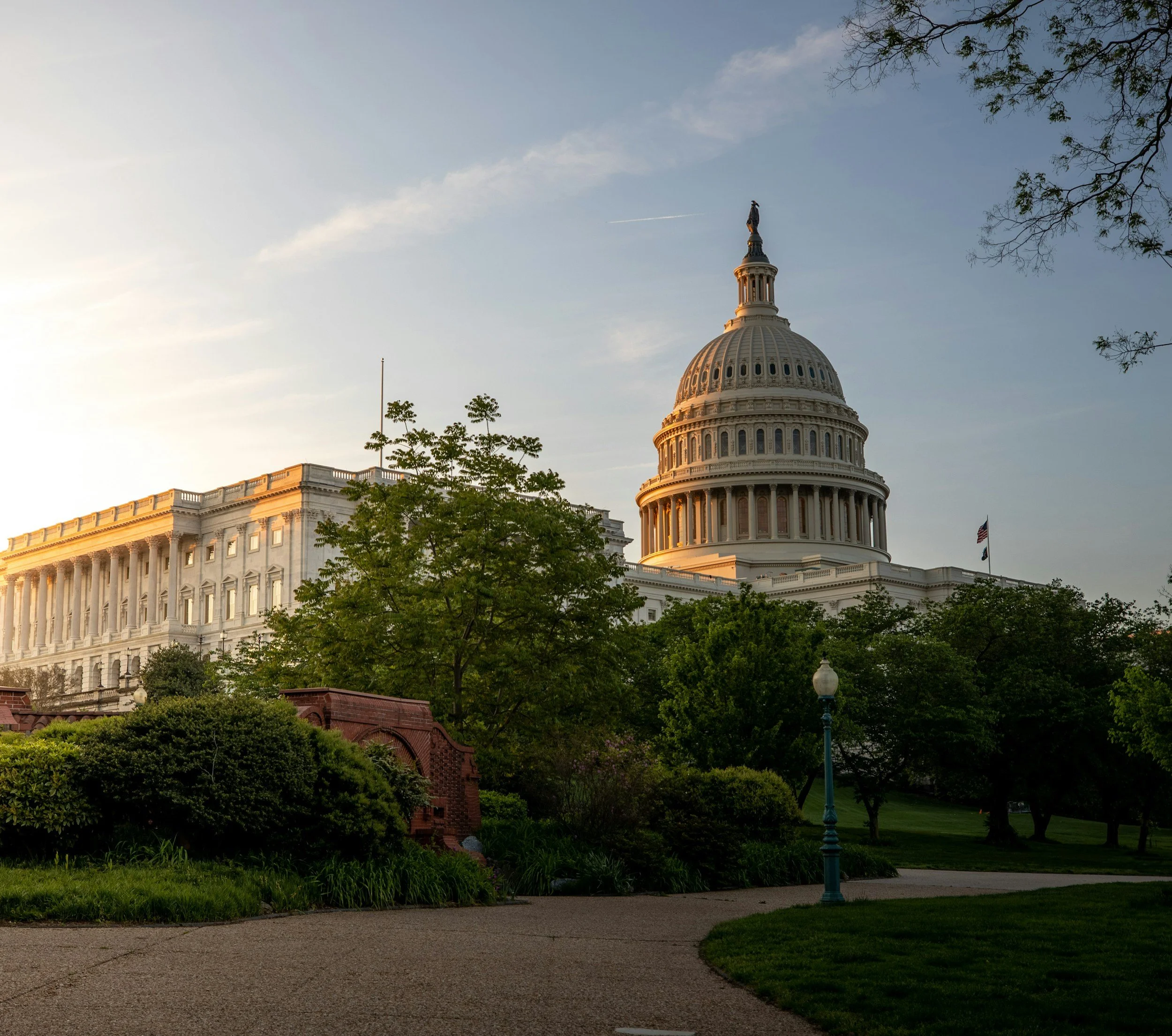
Photo by Andy Feliciotti/Unsplash.
On Tuesday, November 3, voters will head to the polls to determine the balance of power in the U.S. Congress. In many states, including Florida, early voting is already underway.
Key races across the country for the U.S. Senate and House of Representatives seats will determine control and the direction of Congress. Currently, Republicans hold a 218-214 seat advantage over Democrats in the House and a 53-47 advantage in the Senate.
Regardless of how the Election Day plays out, Congress will have several key infrastructure bills to vote on when the House and Senate reconvene in November.
Funding for Surface Transportation
The BUILD America 250 Act, formally Building Unrivaled Infrastructure and Long-term Development for America’s 250th Act (H.R. 8870), authorizes $580 billion in funding over five years for federal surface transportation programs.
That figure includes $475 billion in authorized spending from the Highway Trust Fund for highway, transit, and safety programs – a 4% increase from the Infrastructure Investment and Jobs Act – along with additional authorizations for future appropriations for rail and transit programs.
The legislation passed through the House Transportation and Infrastructure Committee on May 22, by an overwhelming bipartisan vote of 62 to 2. Still, the bill is waiting for a full vote in the House, while the Senate has not yet introduced any companion legislation.
Funding for Water Infrastructure
The Water Resources Development Act (WRDA) authorizes the U.S. Army Corps of Engineers (Corps) Civil Works Program for projects to improve the nation’s ports and harbors, inland waterway navigation, flood and storm protection, and other aspects of our water resources infrastructure.
Enacted every two years, WRDA authorizes funding for locally-driven projects that deliver local, regional and national benefits. These projects help strengthen the nation’s global competitiveness, move goods throughout the country and abroad, protect communities, grow the economy, and create jobs.
The House version of WRDA 2026, which passed with an overwhelming bipartisan majority of 415 to 9 on September 16, authorizes 133 new feasibility studies for locally proposed water resources infrastructure projects and 14 projects that have been vetted by the Corps and are ready for construction.
The Senate version of WRDA 2026 authorizes 61 new project feasibility studies for locally proposed water resources infrastructure projects and 15 new or modified projects that have been vetted by the Corps and are ready for construction. The legislation is still awaiting a vote of the full Senate after earning unanimous approval by the Senate Environment and Public Works Committee on July 15.
The legislation also reauthorizes several water infrastructure programs that provide subsidized loans to deliver safe drinking water, treat wastewater, recycle water for specific purposes and manage stormwater.
The Drinking Water State Revolving Funds (DWSRFs) are reauthorized at increasing funding levels incrementally over the next four years, from $3.75 billion in 2027 to $4.5 billion in 2030. The Clean Water State Revolving Funds (CWSRFs) are reauthorized at $3.5 billion annually through 2030.
The Water Infrastructure Finance and Innovation Act (WIFIA) program is reauthorized at $65 million, annually, for four years from 2027 through 2030. Appropriations of $65 million for WIFIA can generate up to one billion in federally backed loans for community drinking water, wastewater, recycled water and stormwater projects.
The legislation also reauthorizes several grant programs, including funding targeted for small and disadvantaged communities, lead in drinking water, resiliency of water systems, tribal water systems, digital infrastructure, sewer overflow and stormwater reuse, and decentralized wastewater systems.
Congress returns to session November 9, with legislative activity expected to resume around the middle of the month.