
Building the Next Generation of Engineers Through Autonomous Learning
By Dorian Maness, Director of Matern Professional Engineering’s K-12 Education Division. The following is sponsored content.
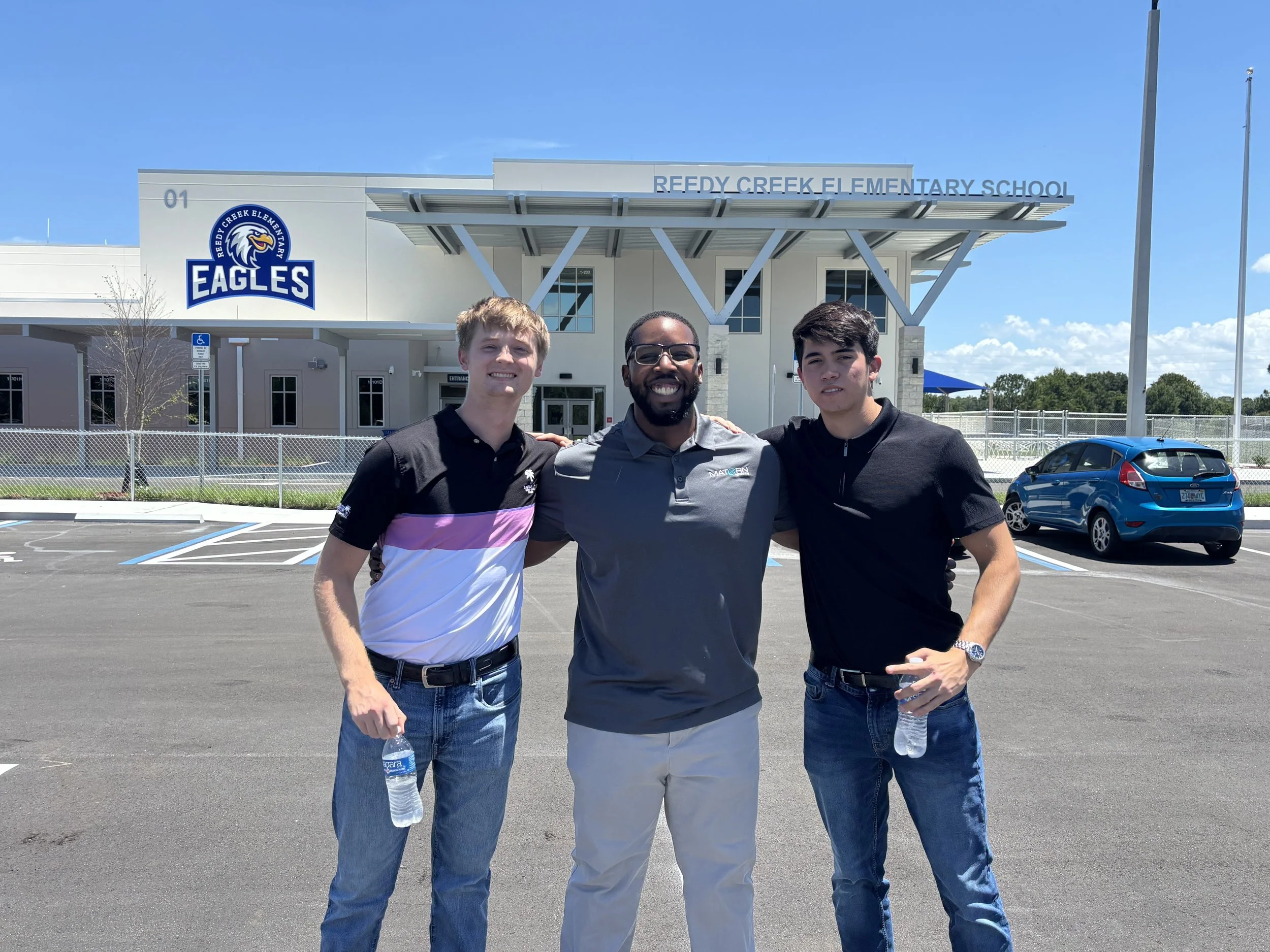
Matern’s The Summer 2026 cohort included electrical interns Eli Croff, Kenneth “Kenny” Gallmon and Lucas Roberson. Photo Credit: Matern Professional Engineering.
When students consider a future in engineering, the path often begins in a classroom, where they build a foundation in math, science, problem-solving, and a growing curiosity about how things work. But for many aspiring engineers, the profession comes into focus when they can see those lessons applied on project sites.
That is the purpose behind Matern Professional Engineering’s Summer 2026 internship program: to give college students meaningful, hands-on experience while helping cultivate the next generation of professionals who will shape the buildings and communities around us.
Beginning June 10 and continuing through August 4, six students joined Matern’s team for an eight-week learning experience. Throughout the summer, the interns worked three eight-hour days each week (24 hours total) alongside members of the firm’s technical staff. The program is designed to introduce interns to the day-to-day work of building-systems engineering, from the tools used to develop designs to the processes that guide sound technical decisions.
The Summer 2026 cohort includes electrical interns Eli Croff, Kenneth “Kenny” Gallmon and Lucas Roberson, as well as mechanical interns Woodvascar “Shilton” Laborde, Logan Valente, Camden Shaffer and Matthew Wortman. The students represent the University of Florida, the University of Central Florida, Florida Polytechnic University, and the University of Alabama, bringing a range of academic experience and perspectives to the program.
During the internship, students built familiarity with industry software including AutoCAD, Revit, and IESVE. They learned how engineering teams approach calculations and design processes, worked with experienced technical professionals, and, when conditions allow, participated in site visits that connect design documents to the built environment.
“During my internship, I learned so much, including designing a complete system,” said Matthew Wortman. “We were allowed so much independent work, and I was able to work autonomously, using my own decision making,” added Camden Shaffer.
That experiential learning is especially important in a field where the work is both technical and deeply connected to everyday life. The team worked on local projects important to the community, including OCPS Orange Technical College South Campus, focusing on the lighting design, power distribution, panels, and circuiting in the panels. The interns also worked on VCS Volusia Pines Elementary, SCPS Bear Lake Elementary and LCS Eustis Elementary, as well as SCPS Sanford Middle School and HECPS Labelle High School in Fort Myers.
The systems inside a building—its power, lighting, air conditioning, plumbing, fire protection and technology—affect how people learn, heal, work and gather. Seeing how those systems are designed helps students appreciate both the responsibility and the opportunity that comes with an engineering career.
“HVAC is not as simple as you think; I learned it is a whole process that really helps people feel comfortable in a room,” explained Shilton Laborde.
Each intern had the opportunity to work directly with Dorian Maness, Director of Matern’s Educational Department. “An internship gives students the chance to move beyond theory and begin understanding the practical decisions behind the spaces people use every day,” he said.
“By working alongside our engineers, they can see how collaboration, precision and problem-solving come together on real projects. Investing time in these students is one way we can support our community and help prepare the professionals who will serve it in the years ahead,” said Maness.
For Matern, the program also reflects the important role local businesses play in strengthening the talent pipeline. Students benefit from mentorship and exposure to professional practice; in return, the engineering community gains emerging professionals with a more informed view of the work, its standards and its impact.
“During my internship, besides the HVAC design principles/basics, the biggest takeaway I learned from my time at Matern was the amount of communication that it takes to successfully complete projects in a professional engineering workplace. The communication between contractors, architects/engineers, and owners is key to effectively meeting deadlines and putting out a good product,” said Valente.
Eli Croff will enter the University of Florida as an electrical engineering freshman this fall and plans to graduate in 2030. Kenny Gallmon is a University of Central Florida electrical engineering senior with a planned Spring 2027 graduation, while Lucas Roberson is a University of Florida electrical engineering sophomore planning to graduate in 2029.
On the mechanical side, Shilton Laborde is a University of Alabama senior studying mechanical engineering and expects to graduate in Summer 2027. Camden Shaffer and Matthew Wortman are both University of Central Florida mechanical engineering juniors; Shaffer plans to graduate in 2028, and Wortman plans to graduate in Spring 2028. Logan Valente will graduate with his Bachelor of Science in Mechanical Engineering in the Spring of 2027 and plans to attend graduate school at Florida Polytechnic University.
Each student is at a different stage of an engineering education. They will all have the opportunity to experience the value of asking questions, working through problems, and learning from people who have built careers in the field.
“Dorian made us realize that we are smarter than we think we are,” the group echoed.
Engineering is ultimately a profession of service. It relies on technical expertise, but it also requires people who understand how their work affects the communities around them. By opening its doors to students this summer, Matern is helping make that connection earlier, giving future engineers a foundation of practical knowledge, professional mentorship, and a clearer vision of the role they can play in building stronger communities.
Dorian Maness is the Director of Matern Professional Engineering’s K-12 Education Division. He can be reached at dmaness@matern.net.