
Florida Environmental Priorities Centered Around Water, Everglades
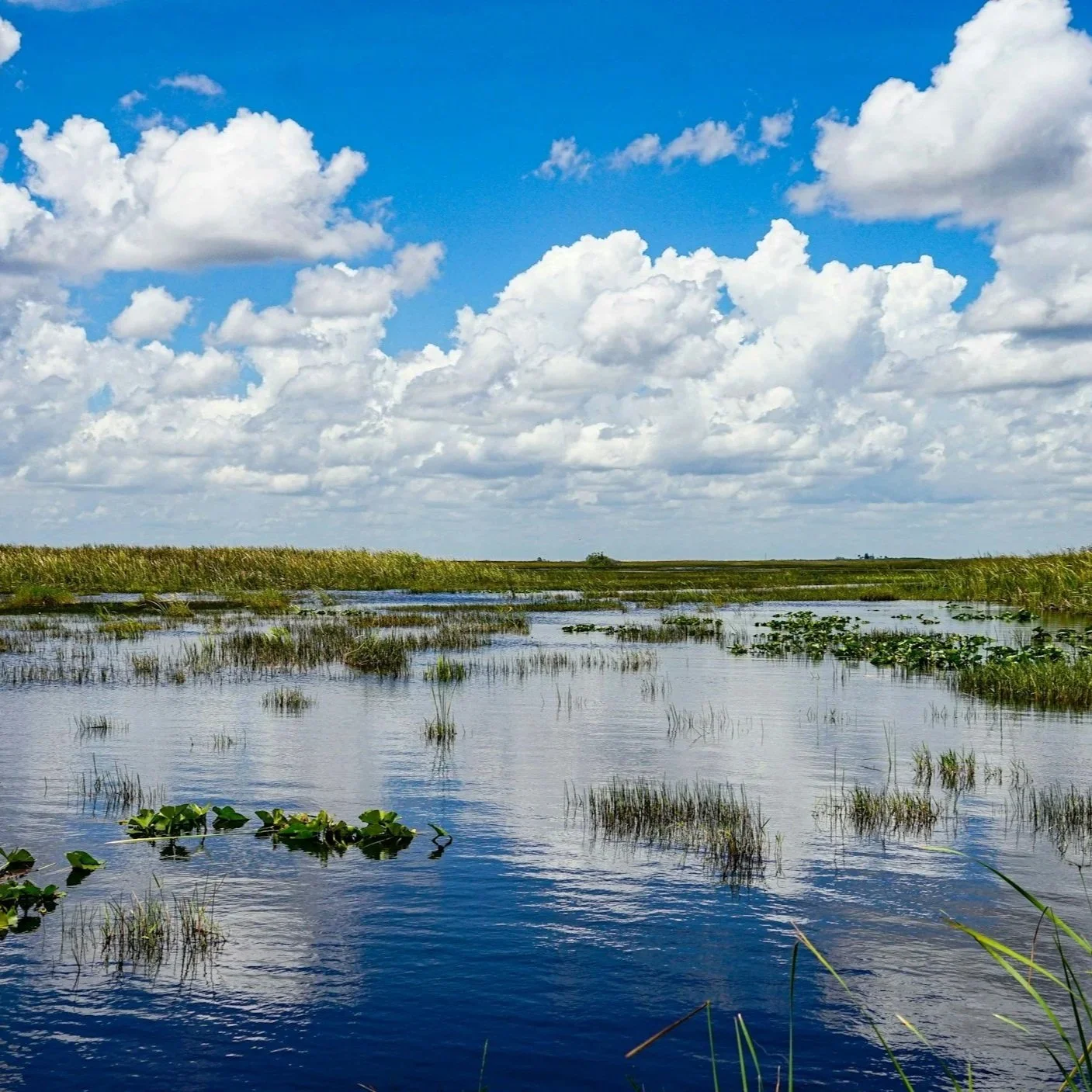
With more than 80 distinct ecosystems across the state, Florida’s environment stands as one of the nation’s most unique and diverse. It’s no surprise that environmental projects remain among the state’s priorities.
Much like the diversity of ecosystems, a variety of projects and initiatives are wrapping up while more are getting underway, each touching a unique part of Florida's environment. From water resources to preserves, here are some of the prioritized environmental projects across the state.
Updated BMAPs Roll-Out
Home to one of the world’s most productive aquifers, water is a key component of the Florida environment, and Florida Department of Environmental Protection’s (FDEP) updated Basin Management Action Plans (BMAPs) reflect renewed efforts to protect the state’s water resources. Adopted in July, these new plans will continue to roll out in the new year.
FDEP hosted more than 60 public meetings and more than 100 one-on-one meetings with regulated entities to ensure stakeholder engagement. The department adopted 28 updated BMAPs, each providing a framework for reducing nutrient pollution in rivers, lakes, springs and other waterways.
BMAPs were developed in collaboration with local governments and agencies, setting clear pollution reductions, and each identifies strategies and projects that promote long-term health for waterbodies. In addition to local projects, the BMAPs included restoration activities such as stormwater projects, fertilizer ordinances and best practices.
“These BMAPs reflect DEP’s commitment to making data-driven decisions and maintaining transparency in our efforts to restore Florida’s water resources,” said Florida Chief Science Officer Dr. Mark Rains. “By incorporating rigorous scientific analysis and continuous monitoring, we are ensuring that our restoration strategies are both effective and adaptable to emerging challenges.”
Resiliency and Preservation Priorities
The FDEP’s Office of Resilience and Coastal Protection updated its Statewide Flooding and Sea Level Rise Resilience Plan for the 2026-27 fiscal year, receiving 203 proposals for projects addressing a flooding or sea level rise threat in current or future conditions. Of the 203 proposals, 123 were deemed eligible and were prioritized, and the top 15 prioritized projects are proposed for FY 2026-27 State funding.
Included in the priority list:
City of Ft. Myers’ Central Advanced Wastewater Treatment Facility,
Atlantic Beach Resilient Lift Station Project Phase I
Monroe County Influent Equalization System Mitigation and Resiliency Initiative
Additionally, FDEP completed most of its nearshore-to-continental shelf seafloor mapping of the entire Florida coast. The $100 million project launched in 2021 yielded a first-of-its-kind statewide high-resolution digital elevation model, utilizing a combination of LiDAR and MBS sonar technologies.
Final data collection will be completed by March, and official documents that will guide coastal management, emergency response, navigation, environmental science, habitat restoration and resilience planning, are expected to be completed this summer.
These initiatives are some of the benefits of a surge of funding earmarked for environmental projects. Meanwhile, funding for other environmental initiatives, such as Florida Forever, has shifted like waves.
"We’ve seen a trend of state lawmakers underinvesting in crucial public services, and in many cases, funding has not returned to pre-Great Recession levels,” said Florida Policy Institute (FPI) CEO Sadaf Knight. “This is the case with Florida Forever, the state’s land acquisition and preservation program. While Florida’s current-year budget includes $270.5 million for Florida Forever, the highest appropriation for the program in 16 years, it’s still below the $300 million in annual funding originally intended for the program. One of FPI’s priorities is supporting full funding for this crucial conservation fund at $300 million per year through at least 2040.”
Florida Forever was launched in 2000, replacing Preservation 2000 as the state’s conservation and recreation lands acquisition program. Since its inception, the state has purchased more than 1 million acres of land through Florida Forever projects. The state spent $300 million or more on the Florida Forever program from 2004-05 to 2008-09 before dropping to $20 million or less in nine straight fiscal years.
There’s been a resurgence over the past several years, although FPI analysis cites eroding investment in conservation and environmental protection as a cause for a number of environmental incidents, including toxic algae blooms in Lake Okeechobee and red tides on the Western coast of the state.
Future Funding Concerns
Knight also noted a few looming budget and revenue issues that Floridians should be aware of that could also impact future appropriations for environmental conservation efforts at the state and local levels in Florida.
"First, Florida is projecting a deficit beginning in FY 2027-28. The looming deficit, coupled with deep cuts included in H.R. 1, the federal reconciliation bill, puts funding for critical programs and services in jeopardy — especially as state lawmakers have shown they are unwilling to raise revenue to fund public services.”
H.R. 1, better known as the One Big Beautiful Bill Act, rescinds and repeals a number of items, including funding provided under the Inflation Reduction Act of 2022 for a variety of environmental programs. Sec. 60014 rescinds unobligated funding for the EPA’s provision of efficient, accurate, and timely reviews, while Sec. 60018 rescinds unobligated funding for the Council on Environmental Quality, two of several environmental mentions in the legislation.
At the state level, proposed legislation could affect current environmental efforts.
"Second, the Florida Legislature is considering a series of cuts to property taxes,” Knight said. “While any proposal would also have to go before voters in 2026, if enacted, local lawmakers would be forced to choose: raise local taxes or cut funding for critical local services, which could include environmental conservation projects."
Currently, a select committee is convened to consider reforming or eliminating the property tax code, and it has produced several House Joint Resolutions (HJR) with potential legislation. HJR 201, for example, would exempt the state’s 5.1 million homesteaded properties from all property taxes other than school district collections, according to FPI.
If passed, it would cost local governments some estimated $18.3 billion annually. Other proposed legislation, such as HJR 213, would change the property assessment process by requiring them to happen once every three years instead of annually, costing localities $5.3 billion over those cycles.
A Spotlight on Projects
The new year brings new opportunities to build off a relatively busy 2025 campaign. Last July, the State and the U.S. Army Corps of Engineers (USACE) agreed to let the state lead several components of the federally funded Comprehensive Everglades Restoration Plan (CERP). The deal sped up the timetable of the Everglades Agricultural Area (EAA) Reservoir project, now expected to be completed in 2029 instead of 2034.
“A long-awaited project, first envisioned and authorized decades ago, is finally becoming a reality. The EAA Reservoir is not only fully funded and under construction — it's moving forward faster than expected, thanks to new state and federal cooperation,” said Governor Ron DeSantis in July. “The completed EAA Reservoir will deliver major benefits for Florida's coastal communities, fishermen, tourism industry, and our unique natural environment that we're conserving for generations to come.”
In addition to its accelerated timeline, the change will allow the state to construct inflow and outflow pump stations and other supporting features, while the USACE will focus on the main reservoir basin. Florida will also take control of projects concerning the Blue Shanty Flow Way, a vital system to deliver clean water south across the Tamiami Trail and into Florida Bay.
Everglades projects have been a point of emphasis across the state, as more than 80 restoration projects have been completed, broken ground or reached a major milestone since 2019. That includes the Picayune Strand Restoration Project, a joint effort between the South Florida Water Management District (SFWMD), USACE, FDEP and other stakeholders.
The multi-year project saw the removal of 260 miles of roads and plugging of 48 miles of canals to restore the natural flow of water to the region. The project spanned some 55,000 acres between Alligator Alley and Tamiami Trail in Southwest Florida, benefitting the environment through restoring wetlands, restoring and enhancing habitats for fish and wildlife including the Florida Panther and improving aquifer recharge to protect underground water supplies and prevent saltwater intrusions.
“This project is already improving water quality and wildlife habitat and helping ensure America’s Everglades are stronger for generations to come,” Alexis A. Lambert, Secretary of the FDEP, said during a celebration of the project’s completion.