
Building Florida’s Engineering Pipeline One Robot at a Time
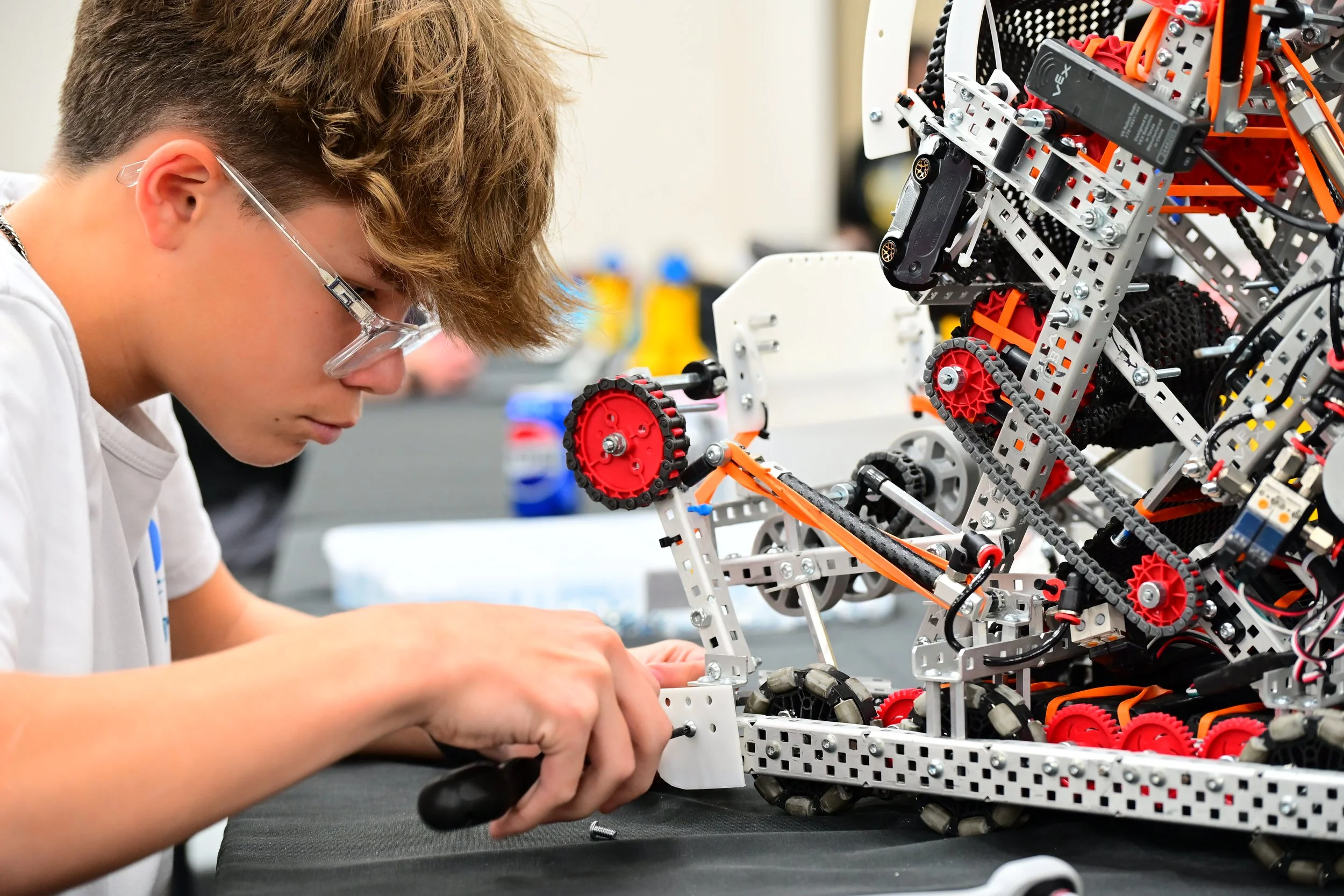
A student repairs his robot between matches at the VEX Robotics Competition.
In late December, while many students were on winter break, the lobby of a hotel just outside Universal Studios in Orlando served as a temporary engineering workspace dedicated to robot repairs, code tuning and match strategy.
Over three days, teams from across Florida and beyond competed at a high level of the VEX Robotics competition, an engineering challenge that requires students to design, build, program, and document a competition-ready robot over the course of a season.
VEX Robotics competitions are built around a single annual challenge or “game” that requires teams to design, build, program, test, iterate, and document a fully autonomous and driver-controlled robot. Teams must operate under constraints that include: limited budgets, fixed materials, precise rules and deadlines.
The event was hosted by Sunshine Robotics, a Central Florida nonprofit dedicated to STEM education, in partnership with the REC Foundation. Sunshine Robotics was founded by veteran coaches and STEM educators who believe that high-quality robotics experiences can shape not just better engineers, but better teammates and leaders. The Orlando event demonstrated exactly that.
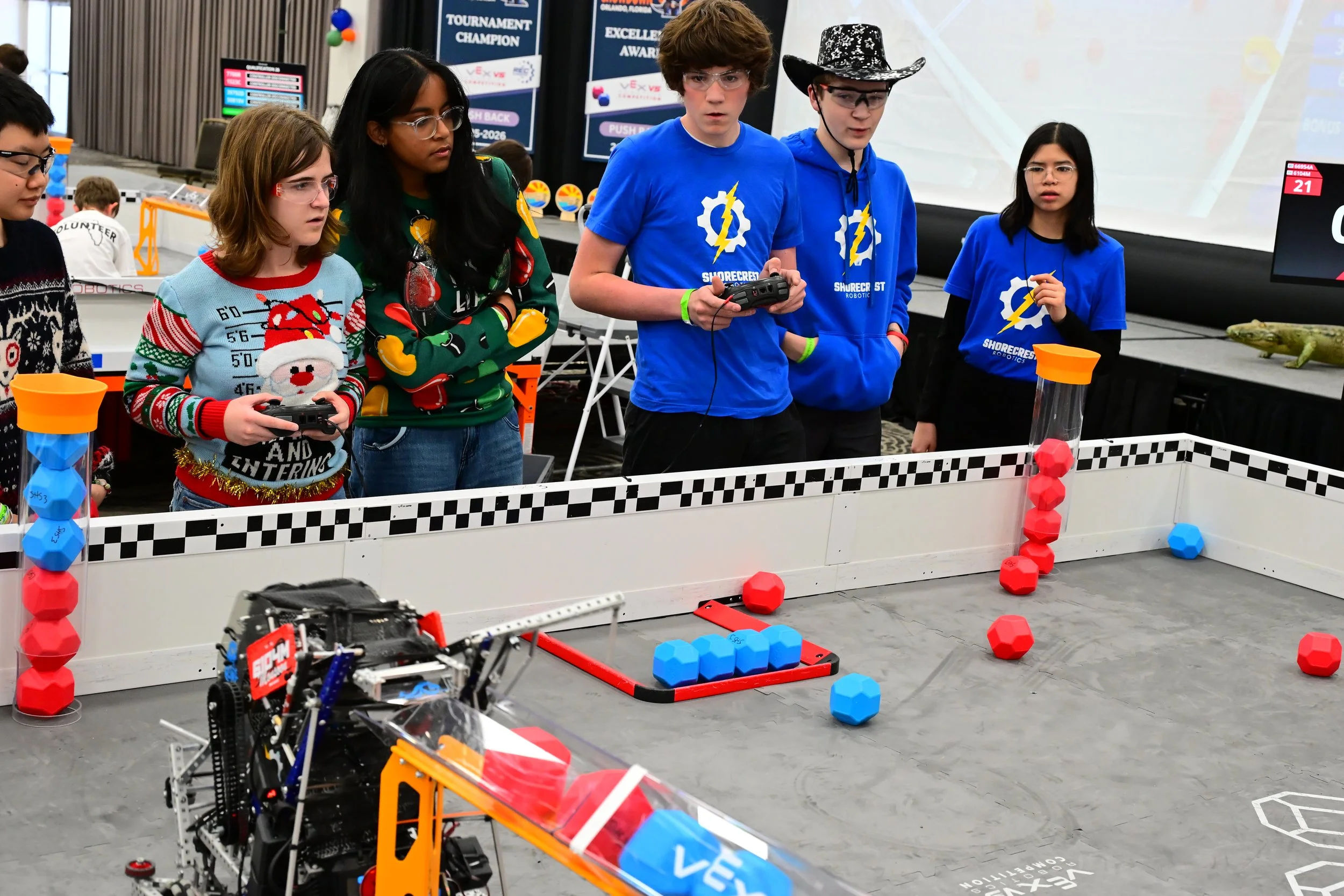
Two alliance teams focus during a high-intensity three-minute match.
Engineering Is a Team Sport
By the time teams arrived in Orlando, the robots were already built. But there was still work to be done – and all under pressure: diagnosing failures, refining autonomous routines, adapting to unexpected conditions and making strategic decisions with limited time and information.
At first glance, the technical learning on display was impressive. Students demonstrated strong command of mechanical systems, sensors, control logic and design. They moved comfortably between hardware and software, troubleshooting issues in real time and making data-informed adjustments between matches.
But what stood out most was not the technical sophistication of the robots; it was how students worked with one another.
VEX Robotics competitions are collaborative. Long before a team arrives at an event, students must learn how to work together over months of trial and error with their own team. They work together for months to develop the best possible robot to be successful at this year’s game. The work doesn’t always go as planned.
That persistence matters. Many teams do not win early. Some never win at all.
Yet the structure of robotics demands that students keep showing up and supporting one another through setbacks. In that sense, robotics mirrors professional engineering environments more closely than many classroom experiences do.
The collaboration intensifies during competition.
In each match, teams are paired with an alliance partner they may have never met before. They have only limited time to share information about their robot’s capabilities.
Based on that sharing, they then have to align on a strategy and execute together under time pressure. Matches are only minutes long. Success depends not just on technical performance, but on communication and adaptability.
These are not scripted interactions. They are real-time exercises in professional collaboration.
This dynamic creates a powerful lesson that extends far beyond robotics. Students see firsthand that success in engineering is shaped by how well you work with others, how you handle pressure, and how you treat your peers when outcomes are uncertain.
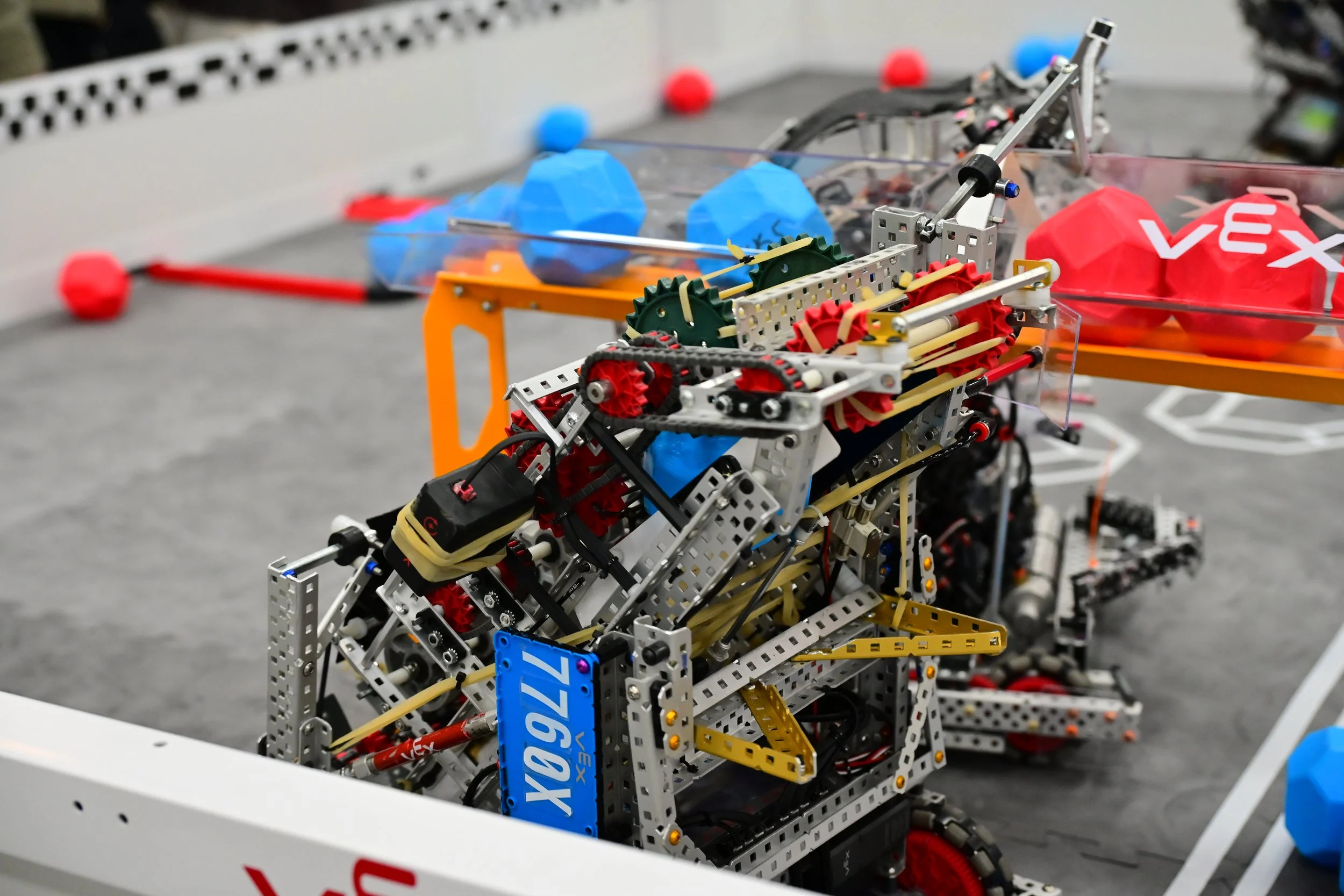
Student robots are designed within strict guidelines and with limited resources to perform during the matches and win the game.
Why This Matters for Florida’s Engineering Community
Florida’s engineering sector continues to grow across infrastructure, aerospace, manufacturing and technology. We all know that while technical skills are essential, interpersonal skills often determine long-term success.
Robotics competitions like this one develop both.
Students leave with experience in problem solving, systems thinking and iterative design. Just as importantly, they gain practice in communication, teamwork, leadership and resilience. They learn how to collaborate across teams and persist through failure, all before they enter a college engineering program or technical workforce.
For industry professionals, these events offer a glimpse of the future engineering pipeline in action. The students tuning code in hotel lobbies today are learning how to collaborate in high-stakes environments tomorrow.
Engineers and engineering firms interested in supporting this work can get involved in future Sunshine Robotics events as volunteers, mentors or sponsors. Industry participation plays a critical role in sustaining high-quality competitions and strengthening Florida’s engineering pipeline.
To learn more about opportunities to engage in next year’s event, contact Sunshine Robotics at admin@sunshinerobotics.com.
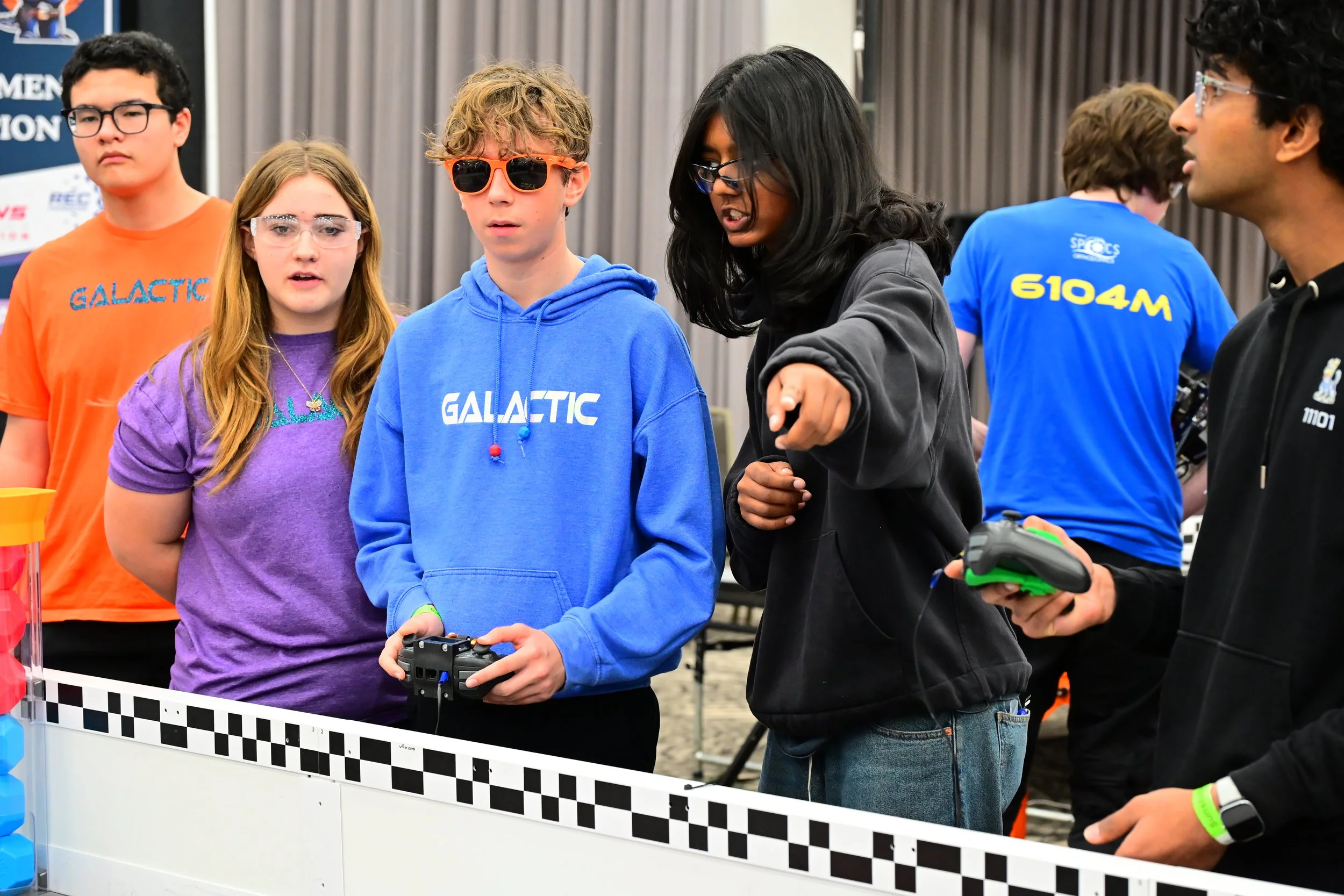
Two teams work together on a strategy before a match.