
Weighing the Benefits of Infrastructure on Florida Tourism
Editor’s Note: The following article is a guest submission by Carnot W. Evans, PE, on behalf of the Florida Engineering Society. Engineering Florida welcomes submitted articles by engineers on topics that affect the State of Florida.
Maybe it’s because I’m an engineer, but whenever I travel, I find myself paying close attention to the way other places design and build the world around them.
Whether it’s the design elements of a structure, the condition of their highways and transit systems, the utility or unique features of the wayfinding systems and strategies they implement, the wonderful monuments they build, or the way they manage traffic and people while they build them, I find myself either marveled at what has been constructed or critiquing it. Either way, that leaves an impression.
Most engineers I’ve spoken to do this in detail as well, as we recognize that it’s the details that have always been important when it comes to enhancing the quality of our infrastructure. Non-engineers also do this, often more subconsciously, and they are left with an impression as well.
Frankly, as engineers, the infrastructure we design impacts more than just our clients and communities directly; it makes those clients and communities stand out to visitors – both for good and bad reasons – which drives the national and international reputations of our clients and communities. And it’s those reputations that drive tourism.
The Infrastructure Behind Florida’s Tourism Success
Here in Florida, we currently enjoy a robust tourist economy. According to Visit Florida, more than 143 million visitors came to Florida in 2025, making Florida the top domestic travel destination and the second most popular U.S. destination for international travelers. That’s a lot to be proud of, and it is something we as engineers need to prioritize in our work. After all, we are not only designing for the 29 million people who reside in this state, but also to accommodate those additional visitors.
There are many reasons for the sustained success of our state’s tourism economy, but the quality of our infrastructure certainly stands out as a primary reason for not only repeat visitors, but also an expanding reputation as a quality travel destination.
Infrastructure has such a broad definition that things that may not be commonly associated with it are not only encompassed within the category, but are absolutely critical to success.
So what is infrastructure? The things we initially associate with the word, such as buildings, highways, airports, cruise terminals and theme parks, become the more front-facing aspects of our built environment, but those are not the only infrastructure that demands attention.
It’s also the mechanical systems that give us our (necessary) air conditioning, run our exciting thrill rides, power our electricity, and propel our transportation systems. It’s the electrical systems that carry power to those theme parks, airports, and buildings. It’s the water systems that not only provide us with clean drinking water and sanitation, but also reduce flooding and pollution and help sustain our natural environments. It’s the technology systems that connect to each other, communicate information, and allow for payment for goods and services.
All of these must be designed and built with intention and planning for their location, appearance, quality and durability to leave a positive impression. Falter in quality or maintenance, and reputation falters with it.
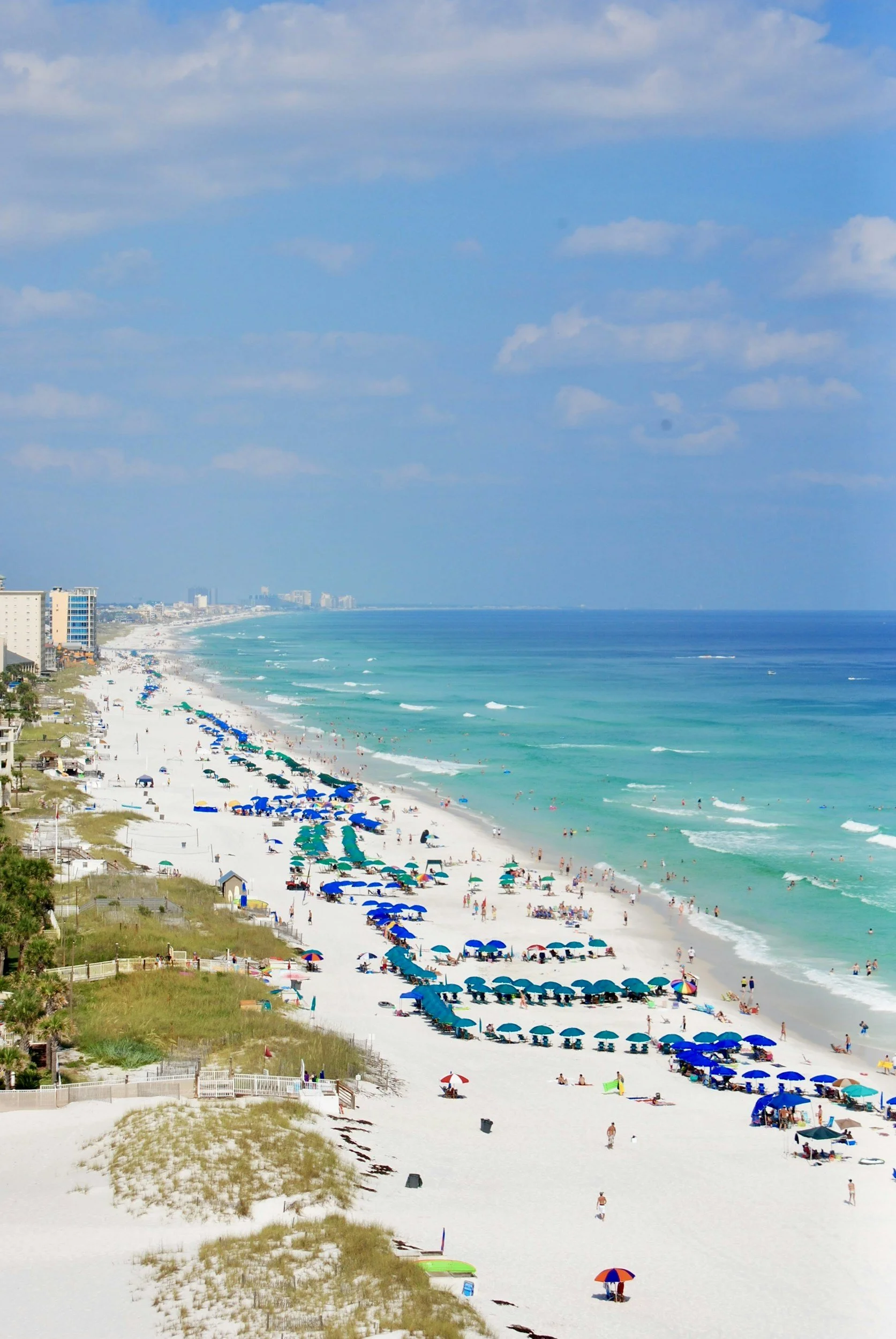
It’s all of those things combined – and more. Florida has the natural benefits of great weather (well, most of the time) and fantastic natural features like our beaches and springs that can invite tourists. Still, it’s how we have designed our state to enhance that invitation and the emphasis we have placed on our infrastructure that have blossomed Florida over the past century into the tourism powerhouse of the U.S.
Historic Infrastructure Led to Florida’s Growth
Prior to Henry Flagler’s investments in Florida, the state was a rather random economic conglomeration of small trade agriculture, sponge harvesting, fishing, and cattle ranching. The natural features that make Florida popular now, like the natural springs, white sand beaches, and great weather, were all present, but there was little in the way of infrastructure to make tourism a robust industry.
The largest city in Florida at that time was Key West, an island off the southern coast accessible only by ship. Miami and Tampa were tiny ports in comparison, as they had little connectivity to the rest of the country, so ships would trade mostly at Key West or Jacksonville, where goods could be loaded onto railroads. Tourism was limited to the very wealthy who could afford to travel by ship.
Once Flagler established the railroad from Jacksonville to Miami (infrastructure!), he also began to build hotels (more infrastructure!) and the Port of Miami (even more infrastructure!). Then, tourism began to grow, as more people could access the natural wonders of our state. A few decades later, air conditioning became more affordable and widespread, making those uncomfortable summer months more bearable, especially in the middle of the state. These improvements in infrastructure not only fueled Florida’s population boom but also sparked its tourism boom .
Then came interstate highways, hotels, theme parks, convention centers, airports, restaurants, shops, and golf courses, and of course, more housing, parks, and schools for the new residents. The demand for more infrastructure was not only a response to the growing population, but the growing tourism industry as well. We built infrastructure to bring people to our state, and they came to enjoy it, building our reputation on the quality of that infrastructure as well as the abundant natural features.
The Importance of Good Infrastructure
It’s not just that engineers built the infrastructure , but how it was planned, executed, and maintained. Proper planning, attention to detail, and quality work of Florida engineers made all the difference in establishing world-class attractions and facilities compared to similar but lesser facilities elsewhere. Walt Disney had a motto regarding his theme parks: “No chipped paint and every horse works.” What he meant was that his theme park was going to be well-built, well-maintained, and that corners were not to be cut. He wasn’t just building a theme park; he was selling an experience and wanted as many people he could accommodate come away with good feelings about what he built.
Disney’s attitude towards infrastructure became a model worth repeating and is something to which we as engineers should aspire. It doesn’t matter if you’re working on a design for a new theme park attraction, a highway, a water treatment facility, high-speed rail, or a software system; if you aren’t paying attention to the details and keeping the satisfaction of the community and other users in mind, your client and community are the ones who will bear the brunt of the poor design’s reputation.
In Florida, that means far more people than just our own residents. Just as great infrastructure invites and supports tourism, poor quality infrastructure leads to a poor reputation, which in turn leads to lower tourism.
Think about a trip you took to someplace where the infrastructure wasn’t high-quality. Are you excited for a repeat visit? Are you telling your friends and family to go there? I think a lot of places have similar natural features as Florida, but don’t necessarily have the same quality of infrastructure. It’s difficult to get around, may not be as comfortable, and certainly not as aesthetic. Frankly, it’s a detraction.
Florida still has room to improve, but a primary reason we have such a great reputation is that we are mostly building it right. As long as we keep improving our infrastructure and plan and build the right way with quality and intention, we will continue to enhance our reputation to the benefit of our communities and our visitors.